Top 10 Best Similarweb Alternatives in 2026

If you’re looking for Similarweb alternatives that are either cheaper or free, I’ve got you covered, as I will show you 10 tools that you can use to replace Similarweb.
Don’t get me wrong, Similarweb is a great research tool that has a lot of great features which are useful for marketers.
Their analytics and intelligence metrics are pretty similar to Google’s, though the data is based largely on 3rd-party data providers and you can learn a lot about your competitors by using Similarweb.
For example, you can check out in what country the website is popular, what are their top traffic channels, from what sites are they getting referral traffic, and more.
But even though Similarweb is great, the free version is as expected, limited in features. Paid plans aren’t cheap either.
Paid plans are not cheap, either. Similarweb’s self-serve packages start at $125 per month (or $199 if you pay monthly) for the entry level Competitive Intelligence tier. If you want SEO and AEO features, you’re looking at $333/month, and the full package with Ads competitive data goes up to $542/month. And the strongest tools (API, market research, full enterprise data) are hidden behind sales calls and custom quotes, so you don’t even know the cost until you’ve sat through a demo.
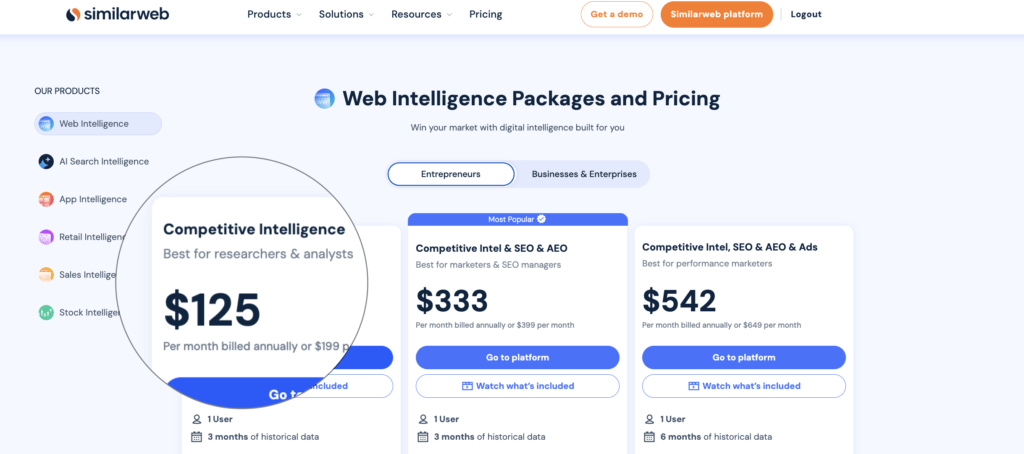
That’s way out of budget for most online side hustlers and small business owners and most of the alternatives I’m about to talk about cost a fraction of that
Some of the below tools also double as solid tools to check website traffic on your own site or your competitors’ if that’s specifically what you’re after.
So, let’s jump in and check out the best Similarweb competitors available in the market today.
Top 10 Similarweb Alternatives in 2026
1. Ahrefs
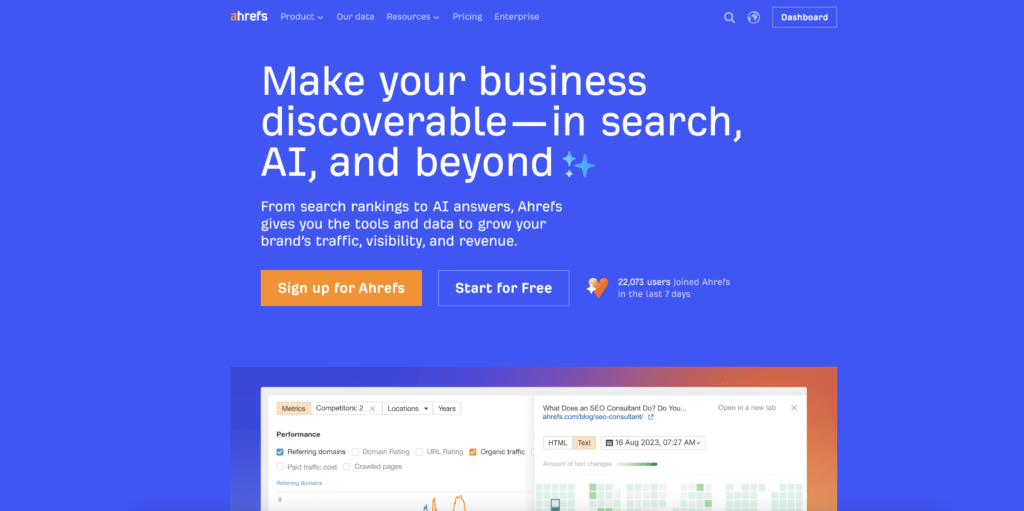
Ahrefs is the most popular Similarweb alternative that you can use for pretty much all your digital marketing needs.
Their suite is great. I’ve been in SEO and link building for the last 5+ years and Ahrefs is my daily driver for link building work.
Here’s what they offer:
- Site Explorer — Use this as a direct alternative to Similarweb.
- Keywords Explorer — This is one of the best in the business and very accurate for keyword research.
- Site Audit — Constant SEO checkups, made effortless.
- Rank Tracker — For your SEO rankings as well as your competitors’.
- Content Explorer — Great for figuring out new content ideas with easy ranking chances, even if your site has no backlinks.
- Brand Radar — Tracks brand mentions across the web and inside AI search environments. A clear nod to where SEO is heading in 2026.
- Batch Analysis — If you’re dealing with large data (like most SEOs) and need a quick check for filtering, this is a lifesaver.
- Link Intersect — Probably the most-used tool by link builders in a more strategic role. Pulls out all the backlinks your competitors have and you don’t.
Pricing starts at $129/month for Ahrefs Lite, $108/month if paid for annually.
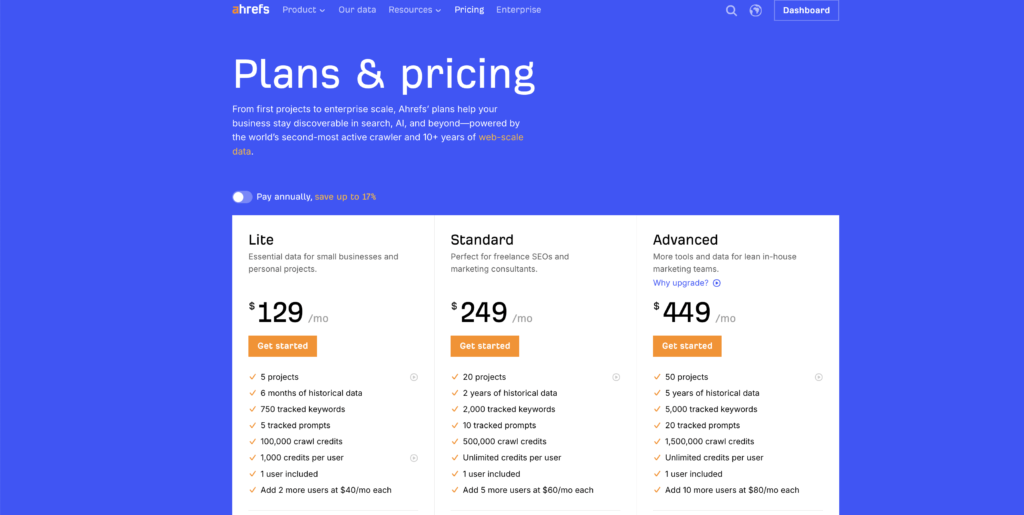
Lite is all about the credit system. You have 1,000 report credits per user, per month and 100,000 crawl credits for Site Audit. Practically any meaningful query (a Site Explorer pull, a backlink check, a keyword export) chips away at that report credit pool. Heavy users will burn through them fast and it is the one real downside of an otherwise excellent platform.
P.S. If you only need light usage, Ahrefs also has a Starter plan for $29/month. It’s fairly hard-capped though (100 credits, no Content Explorer, monthly billing only), so for anyone doing real SEO work at that price point I’d still go with an alternative.
2. Semrush
I use Semrush for SEO and market research every day, and it’s the second well-known Similarweb alternative available.
It’s sort of like a Swiss army knife for digital marketing. More than just another competitor analysis tool, it’s a one-stop platform that goes far beyond traffic insights. While Similarweb is mainly focused on traffic analytics and competitive intelligence, Semrush provides a much wider range of tools for SEO, content, and paid advertising.
Quick news while we’re here: Adobe closed its acquisition of Semrush for $1.9 billion on April 28, 2026. So next time you log in and see that new “Semrush, an Adobe Company” branding, you’ll know why. For users nothing has changed day-to-day, but it’s worth knowing where the tool is going.
If you’re comparing them, here are a few things to know:
They pull data from a number of sources, including clickstream and Google SERP analysis, which I’ve found to be more reliable on smaller sites than Similarweb’s panel-based estimates. I’ve seen Similarweb wildly over- and under-report numbers on sites under 5K monthly visitors, which is a problem if you’re researching small competitors in your niche.
They also launched Semrush One, which integrates the SEO Toolkit with AI Visibility tracking. If you care about how your brand looks in ChatGPT, Perplexity, and Google’s AI Overviews—which you really should by 2026—it’s useful.
Some of the main features:
- Domain Overview — Pull traffic data and key metrics for any website. The closest direct alternative to Similarweb.
- Keyword Magic Tool — Huge keyword database to find content opportunities and ranking ideas.
- Site Audit — Scans your site for technical SEO issues and provides you with a prioritized list of fixes.
- Backlink Analytics & Gap — View your backlinks and what your competitors have that you don’t. Solid for finding link opportunities.
- Position Tracking — Daily ranking tracking of your keywords on desktop and mobile
- .Trends add-on — The closest Semrush feature to Similarweb’s core traffic and audience data on competitors. Pricey though, see below.
- AI Visibility (via Semrush One) — Tracks how your brand shows up across ChatGPT, Perplexity, Google AI Overviews, and Gemini.
- Content Audit & SEO Writing Assistant — Improves existing content and generates new content that is designed for search.
Now for the prices. Semrush One is the new flagship and pricing comes in three tiers:
- Starter: $199/month
- Pro+: $299/month
- Advanced: $549/month
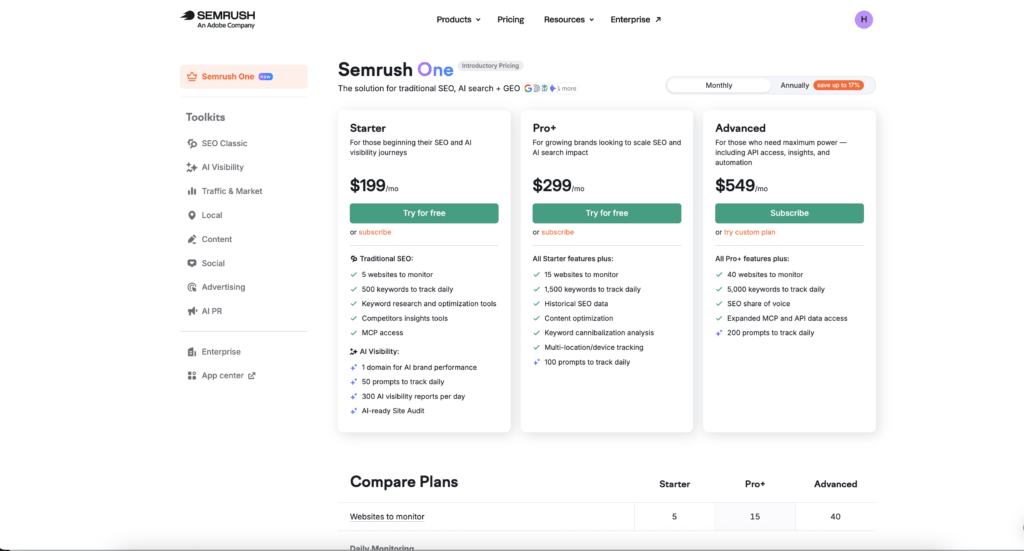
(Annual would be ~17% less based on the toggle )
If you don’t need AI Visibility tracking, the old, cheaper SEO Classic plans are still available. Pro is $139.95/month ($117.33/year), Guru is $249.95/month ($208.33/year), and Business is $499.95/month ($416.66/year). But real talk in 2026 if you’re already paying that much the AI tracking is the part you don’t want to skip.
Heads up though, the .Trends add-on (most similar to Similarweb’s core competitive intel) costs a steep $289/month on top of your subscription. So if traffic data is the number one reason you go shopping around, the math gets ugly quickly.
Worthwhile for agencies and serious in-house teams. If you are a hobby blogger, probably way too much.
3. SE Ranking
I don’t know why more people aren’t talking about SE Ranking. It’s got a lot of features packed into a price that you really can’t ignore.
Cool thing is they’ve fully rebranded around SEO + GEO (Generative Engine Optimization, aka AI search visibility). Now all plans include daily prompt tracking for ChatGPT, Google AI Mode, Perplexity and more. So the AI search angle is baked in rather than an add-on like most of the tools on this list.
It also has strong reviews, and for good reason. Here’s some of what they offer:
- Keyword Research — Keyword ideas to build your content around.
- Website Audit — Checks your site for errors and gives you SEO tips.
- Rank Tracking — Track your keywords’ positions in search results, including AI-driven results.
- Backlinks Tool — Your backlinks and your competitors’.
- SEO Competitor Research — Get an edge over your rivals by analyzing their SEO moves.
- GEO Research — Track 5–15 domains across AI search to see who’s getting cited and why.
- MCP Access — Connect SE Ranking data to your AI workflows. Useful if you’re building anything custom.
- API Access — 25K credits on Core, 100K on Growth.
Now let’s talk prices. They’ve gone up a lot recently, which honestly tracks with the rest of the industry as everyone bakes GEO features into their tools.
They’ve broken things down into two main tiers: Core at $129/month ($103.20 yearly) and Growth at $279/month ($223.20 annual).
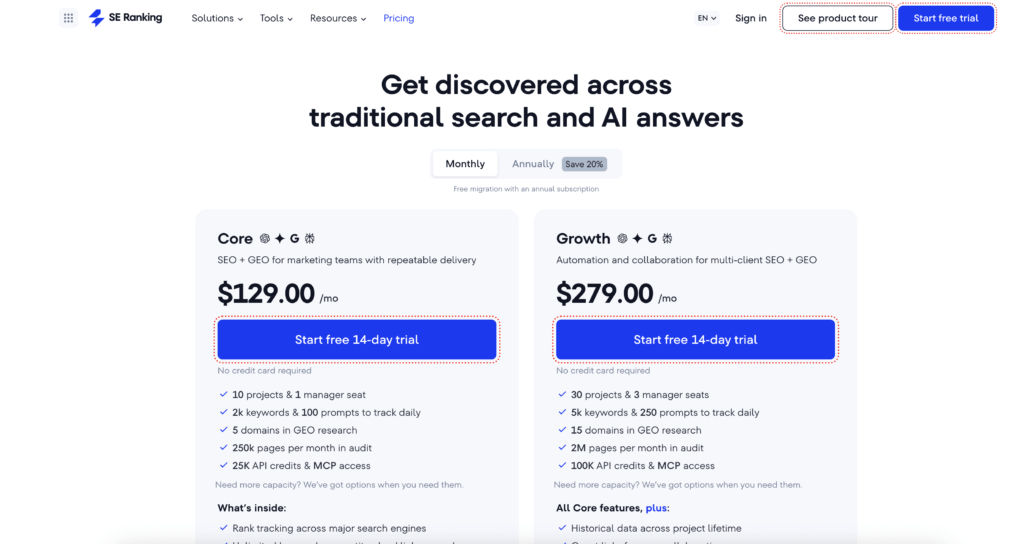
Core gives you 10 projects, 2K keywords and 100 prompts to track on a daily basis. Growth scales to 30 projects, 5K keywords and 250 prompts.
Free 14-day trial, no credit card needed, which is genuinely rare in this space.
4. Moz (Pro)
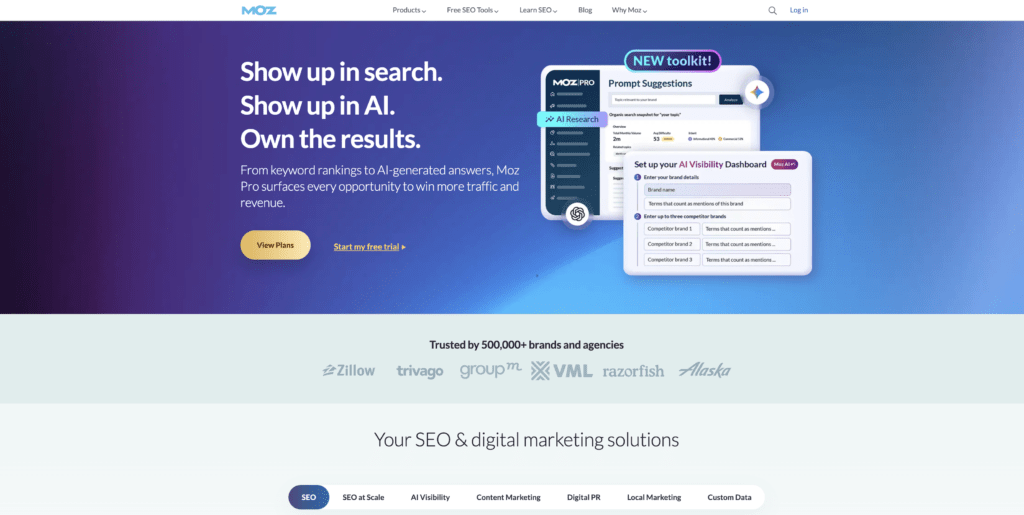
Most of you probably already know or at least have heard of Moz, if you’ve been doing marketing for a while (hint: they used to be called SEOmoz).
Moz has been around for quite some time now and they were one of the first SEO platforms to introduce us to a lot of great tools like Link Explorer.
It’s still more SEO-focused than a do-it-all kind of tool, but the core stuff is solid:
- Keyword Explorer — Volume and difficulty for any keyword.
- Link Explorer — See your backlinks and your competition’s.
- Site Crawl — Audit and optimization tips.
- Rank Tracking — Track your website’s ranking in the SERPs.
- Domain Authority — Moz’s proprietary authority score, still widely used across the SEO industry as a quick credibility check on a domain.
- Moz AI-powered tools — They’ve rolled out AI Search/GEO features across all paid plans, so you can track how your site shows up in AI-driven search results too.
Pricing is divided into three main plans, Standard at $99/month ($79 annual), Medium at $179/month ($143 annual) and Large at $299/month ($239 annual). They also have a Starter plan for individuals managing one website at $49/month, but it’s quite limited.
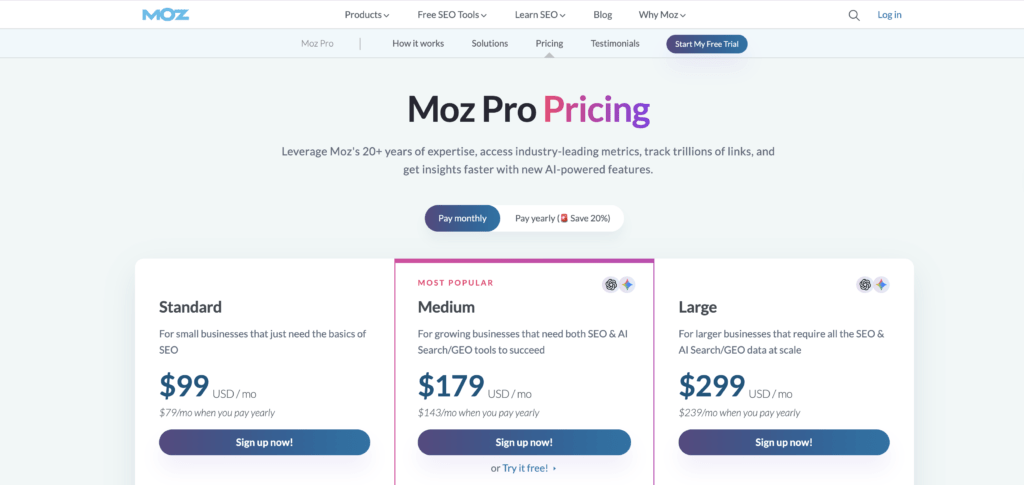
This is where Moz Pro starts to get really useful for most folks – the Medium plan. That’s where you get real AI Search/GEO tools, 10 campaigns and 1,500 keyword rankings. Standard works for very small operations, but restricts you to 3 campaigns and 300 keywords, which you’ll quickly outgrow.
Moz Pro is a fine Similarweb alternative, but for the price, I think their competitors are doing better. Even if you don’t pay, there is still value in the free MozBar and Domain Authority lookups, so the brand still deserves a spot in the SEO toolkit.
5. Mangools (SiteProfiler)
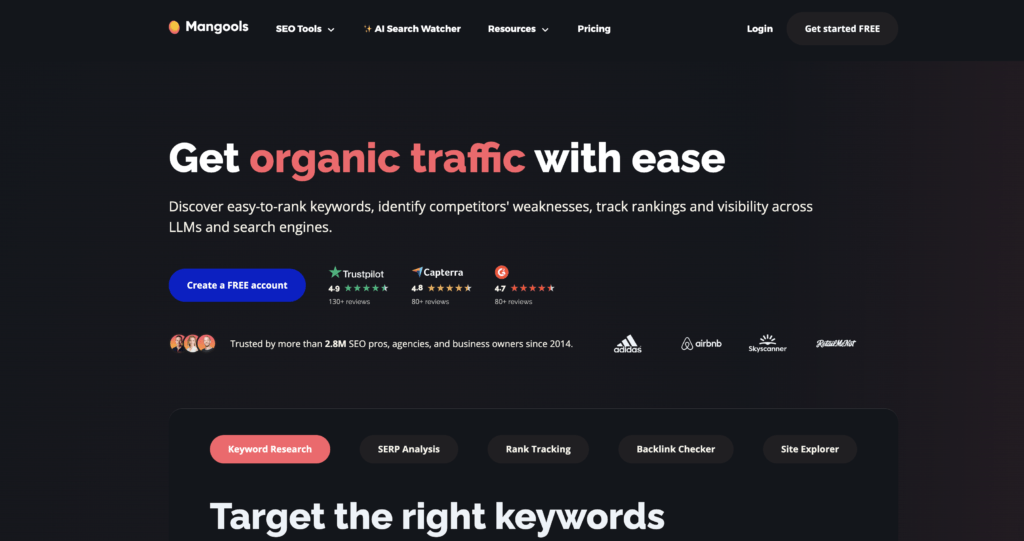
Mangools is one of the affordable tools on this list and honestly one of the few that still compete with the bigger players when you do the per dollar math.
Mangools is not a true drop-in replacement for Similarweb. It doesn’t make traffic estimates like Similarweb does. Where it really shines is in the SEO side of competitor research, which is what most people end up using Similarweb for anyway. So if traffic estimation isn’t your main reason to shop around, Mangools is one of the best options here.
You get five core SEO tools:
- KWFinder — Keyword research with exact search volumes, difficulty scores, and a ton of keyword ideas.
- SERPChecker — SERP competitor analysis with 49 metrics across desktop, mobile, and 65k+ locations.
- SERPWatcher — Daily rank tracking with city-level localization. Pretty solid for local SEO work.
- LinkMiner — Backlink discovery and analysis for outreach targets.
- SiteProfiler — Domain authority and core SEO metrics for any site.
Now the interesting part for 2026. AI Search Watcher PRO is now included with every Mangools plan. 500 monitored prompts, unlimited monitors, and tracking in ChatGPT, Gemini, Claude, and a few other LLMs, all for the base price. No separate subscription. No add-on. Just included. That’s a huge jump from even a few months ago, and makes Mangools probably the cheapest way to get serious AI search visibility tracking at the moment.
Pricing comes in three tiers, all annual billing with their standard 35% discount:
- Basic — $30.50/mo: For solopreneurs and freelance SEOs. 100 keyword research requests per 24h, 200 tracked keywords, 100k backlinks/month. No extra seats though.
- Premium — $40.50/mo: For marketing teams. 500 requests per 24h, 700 tracked keywords, 500k backlinks/month, 3 extra seats included.
- Agency — $70.50/mo: For agencies. 1.2k requests per 24h, 1.5k tracked keywords, 1.2M backlinks/month, 5 extra seats.
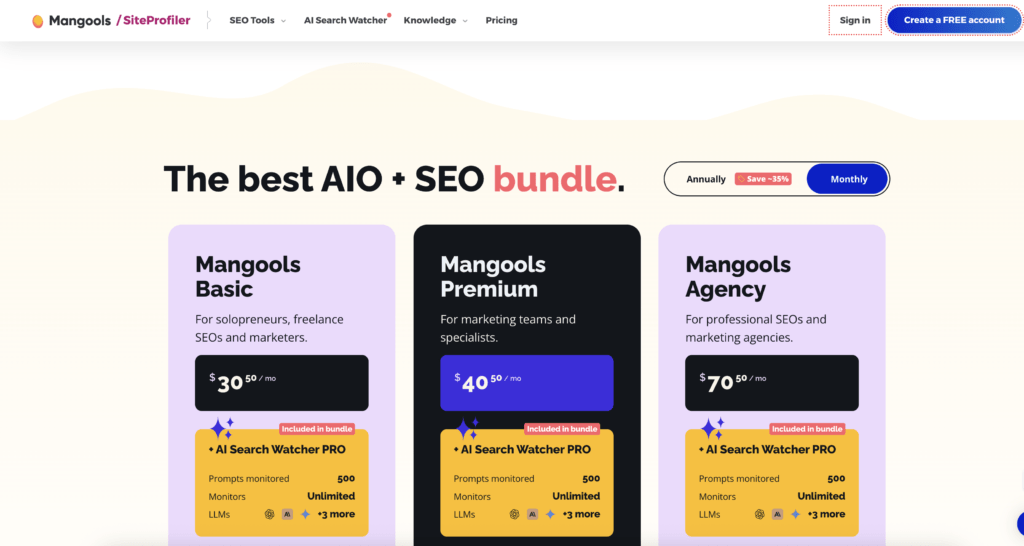
One thing to note about Basic though, no extra seats. The second you want to add a teammate, you’re getting bumped up to Premium whether you wanted to or not. Fine for solo operation, but good to know before you sign up thinking you’ll grow into it.
Sure, Mangools doesn’t have 40+ tools like Semrush and they’re not as deep on the data side but with AI Search Watcher baked in for under $31/month?
2026 is really tough to beat for the value per dollar.
6. SpyFu (great for PPC)
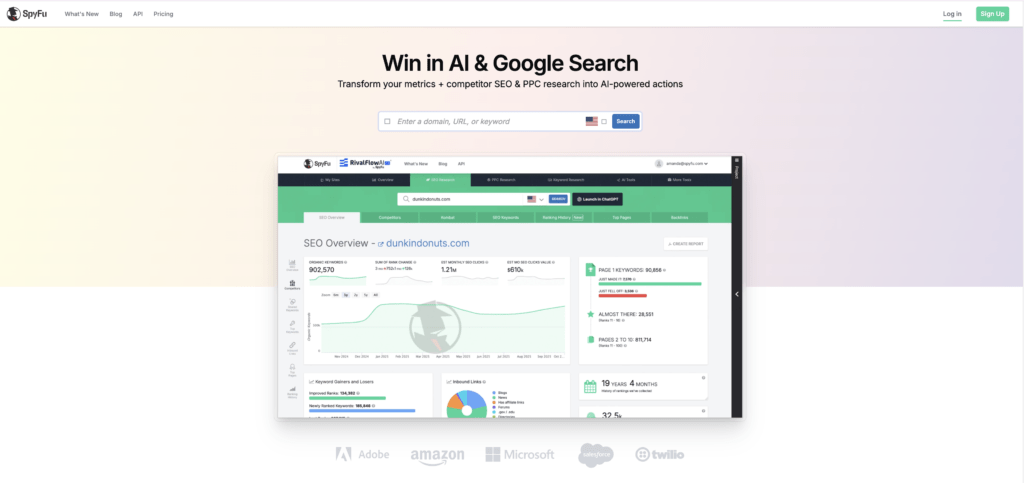
SpyFu is one of my favorite Similarweb alternatives. In fact I was using their platform long before Similarweb was born.
SpyFu I use for… well, the name says it all. When I am sending paid traffic to some of my sites, like when I am doing affiliate marketing on Google Ads or Microsoft Advertising.
Today SpyFu has become a full-fledged SEO, PPC and AI intelligence suite that covers almost anything you would want from a Similarweb competitor. But for me personally their PPC intelligence metrics are just the best in the business and that’s mostly what I use them for.
What’s new in 2026: SpyFu is all in on AI. They’ve rebranded their pricing page to “Unlock AI-fueled Marketing Insights,” added RivalFlow AI (which boosts your visibility in AI search), built a ChatGPT Integration so you can pull SpyFu data directly inside ChatGPT, and rolled out AI Brand Monitoring to track how your brand shows up across AI platforms. So they are not just an SEO+PPC tool anymore.
Some of the great tools you get with SpyFu:
- PPC Keyword Research — If you are doing a lot of paid traffic you got to try this.
- Google Ads Competitors — See who’s competing with your ads, check out their copy and get some “inspiration” for what’s working.
- Pre-built Google Ads Campaigns — Available only with SpyFu. They send you a file of pre-made ads in keyword groups that are laser targeted to your industry. Paste into Google Ads and you’re advertising like a PRO in 5 minutes. Fair warning this one is behind a Pro + AI minimum now.
- Ad History — 10+ years of ad history from competitors or specific keywords. Deepest historical database in the industry.
- SEO Competitor Research — More spying on the enemy to see what they’re doing so you can do it better and beat them.
- SEO Keyword Finder — Use for content & on-page SEO.
- Backlink Checker — See your backlinks and your competitors’.
- Rank Tracker — Track your website’s ranking in the search engines.
- RivalFlow AI — AI search visibility tool. 1 site on Pro + AI, 10 sites on Team/Agency
- ChatGPT Integration — Integrate SpyFu data directly into your ChatGPT workflows.
Even just on PPC data alone, SpyFu is worth the money. One of the best Similarweb alternatives still on this price bracket.
Speaking of cash…
What is the cost of SpyFu? With all these features you’d expect a tool to cost a pretty penny, right?
False.
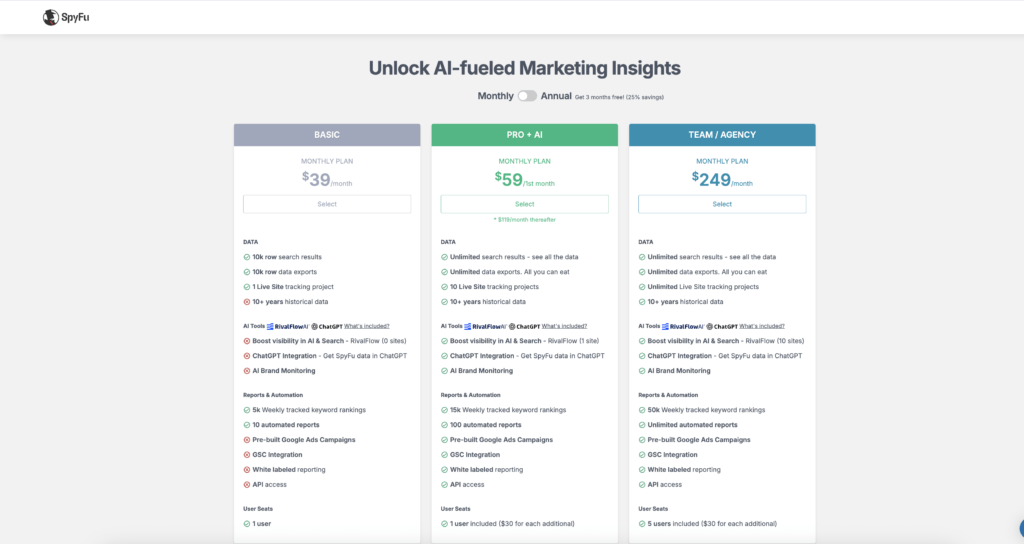
SpyFu is one of the cheapest SEO tools out there. Pricing starts at $39/month for Basic, $119/month for Pro + AI (currently $59 for the first month as an intro deal), and $249/month for Team/Agency. Annual billing gets you 25% off all tiers (3 months free).
Just a heads up though, all the AI features (RivalFlow, ChatGPT Integration, AI Brand Monitoring) are gated behind Pro + AI minimum. If you’re shopping for those, they’re $119/month not $39.
Now forward…
7. Serpstat
Serpstat is more SEO-centric, so it doesn’t have some of the features that other alternatives have (like full PPC data), but it’s a good option if your work is mostly SEO.
The real intrigue for Serpstat in 2026 is how much they’ve adopted AI integrations. The Team plan now includes integration of ChatGPT and Claude via MCP and an AI Overview Brand Opportunities Report that tracks how your brand shows up in AI search. And if you’re building any type of AI workflow with your SEO data, Serpstat is one of the easier tools to plug in.Some of their features:
- Keyword Research — Related keywords and search question data to help you create better content.
- Site Analysis — Domain insights and competitor research.
- Rank Tracker — Daily rank tracking across desktop and mobile.
- Site Audit — Full website audit showing what you need to fix to improve rankings.
- Backlink Analysis — Last 2 years of backlinks for your site or your competitors.
- AI Overview Brand Opportunities Report — Track how your brand shows up in AI Overviews.
- ChatGPT and Claude Integration (MCP) — Pull Serpstat data directly into your AI workflows. Available on Team plan and up.
- Batch Analysis — Useful when you’re working with a lot of data.
- API Access — Available from Team plan onwards.
Pricing has been restructured into three tiers with a 27% annual discount:
- Individual — $50/mo annual ($69 monthly): For freelancers and beginners. 5 projects, 100 daily searches, 10K keyword position checks, 30K pages to audit.
- Team — $100/mo annual ($129 monthly): For agencies and growing teams. Unlimited projects, 500 daily searches, 50K keyword position checks (configurable), 150K pages to audit, plus all the AI integrations and API access.
- Agency — $410/mo annual ($499 monthly): For agencies of large size. 5K searches per day 500K keyword position checks 1.5M pages to audit White label reports Dedicated data engineer consultation Phone support
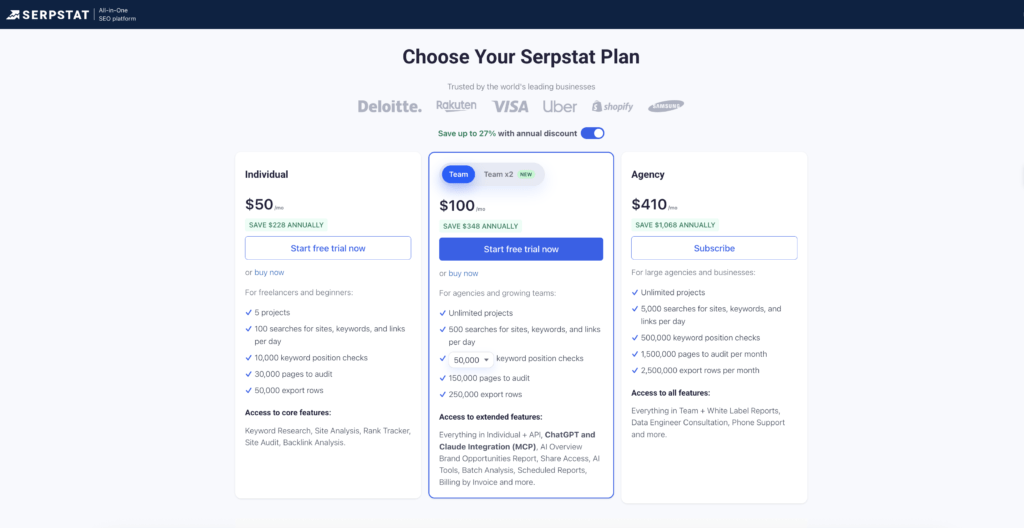
Honestly, Individual at $50/month is one of the better entry-level prices on this list, especially when you compare it to Ahrefs Lite at $129/month. But you can’t have the AI integrations on Individual — those are Team plan only. So if MCP is what you want, you’re looking at $100/month minimum.
8. Ubersuggest
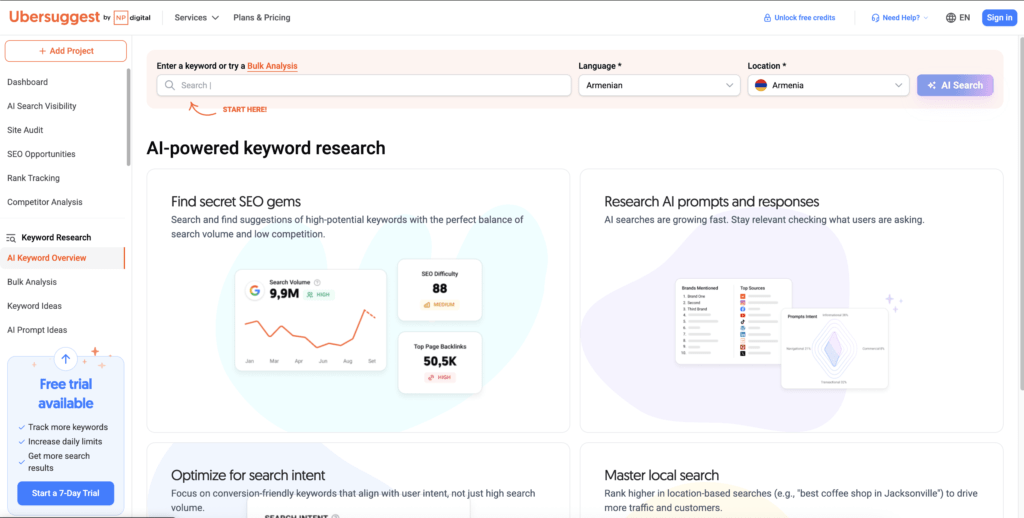
Ubersuggest by Neil Patel is a straightforward Similarweb alternative targeted at smaller businesses and solo marketers. While most people know it for keyword suggestions, site audits and content ideas, it’s actually a full-bodied SEO suite with easy to understand data.
It’s great for quick, actionable research, with traffic analysis like competitor top pages, keyword opportunities and backlink data.
Ubersuggest has completely pivoted around SEO and AEO (answer engine optimization) What’s interesting in 2026: The page banner now reads “Win at the game of SEO and AEO.” Every plan includes ChatGPT and Gemini integration for all AI features, AI prompt ideas built into every search, and credits to refresh both keywords and AI responses. So if you’re a solo marketer trying to figure out the AI search landscape without paying enterprise prices, Ubersuggest is one of the most accessible entry points right now.
Key features:
- Keyword Research — Search volume, difficulty, CPC, and a solid database of keyword ideas.
- Site Audit — Technical scan with prioritized fixes and an SEO Health Score.
- Rank Tracking — Daily tracking with historical data.
- Competitor Analysis — Top pages, keywords, and backlinks for any competitor.
- AI Search Visibility — Tracks how your brand shows up in ChatGPT and Gemini answers.
- ChatGPT App + MCP Integration — Pull Ubersuggest data directly into your AI workflows.
The cool thing about Ubersuggest is that Neil realized that a lot of people hate the subscription (pay-monthly) model, so he gives you two pricing structures: a monthly plan and a one-time lifetime deal. Both are currently offering aggressive discounting.
Monthly pricing (limited time offer at the moment):
- Individual — $12/mo: 1 user 1 domain 25 AI prompt ideas per search 125 tracked keywords 5 competitors per domain For solo entrepreneurs.
- Business — $20/mo: 2 users 7 domains (projects) 50 AI prompt ideas per search 150 tracked keywords 10 competitors per domain For small and medium-sized businesses.
- Enterprise — $40/mo: 5 users, 15 domains, 75 AI prompt ideas per search, 300 tracked keywords, 15 competitors per domain. For agencies and larger operations.
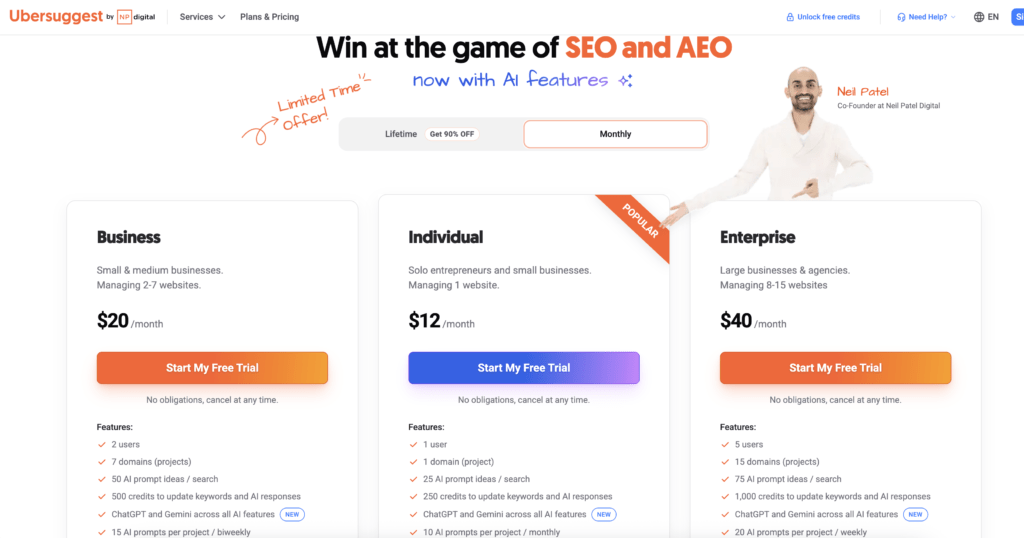
Lifetime plans are also 90% off right now, which is one of those “hard to ignore if you’re going to use it long-term” kind of deals.
FYI, these are promotional prices, as Ubersuggest’s normal pricing has historically been higher ($29/$49/$99 monthly), so if you’re considering it, the current rates are a real window. You can decide if you think Neil will be able to keep the discount in perpetuity.
Still, pretty affordable, but you don’t get quite the same amount of data and tools as the big boys. It’s also missing a few key features. But what will it cost in 2026? It’s hard to argue against the value.
9. Surfer SEO
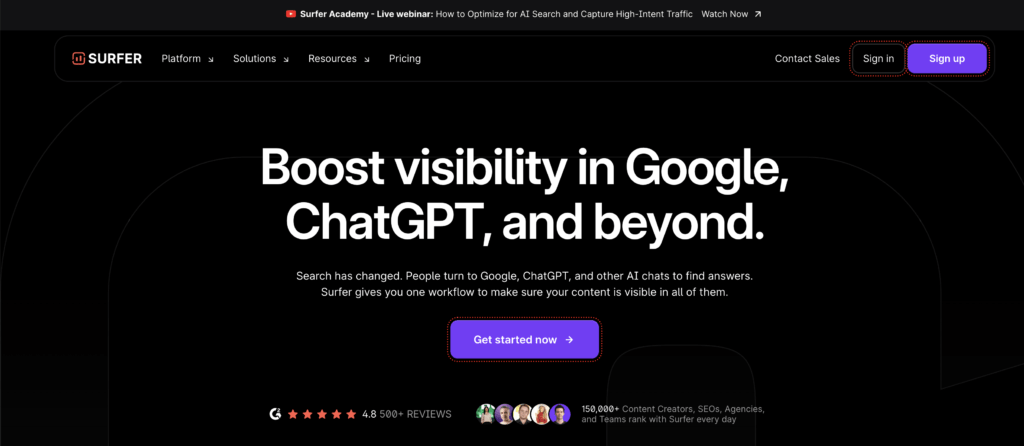
Surfer is a little bit of a different animal than the rest of the tools on this list. It’s not a competitive intelligence tool in the traditional sense of Similarweb. But what it is, is the tool you actually use to create content that shows up in both Google and AI search results, which is half the reason you’d even be looking at Similarweb data in the first place.
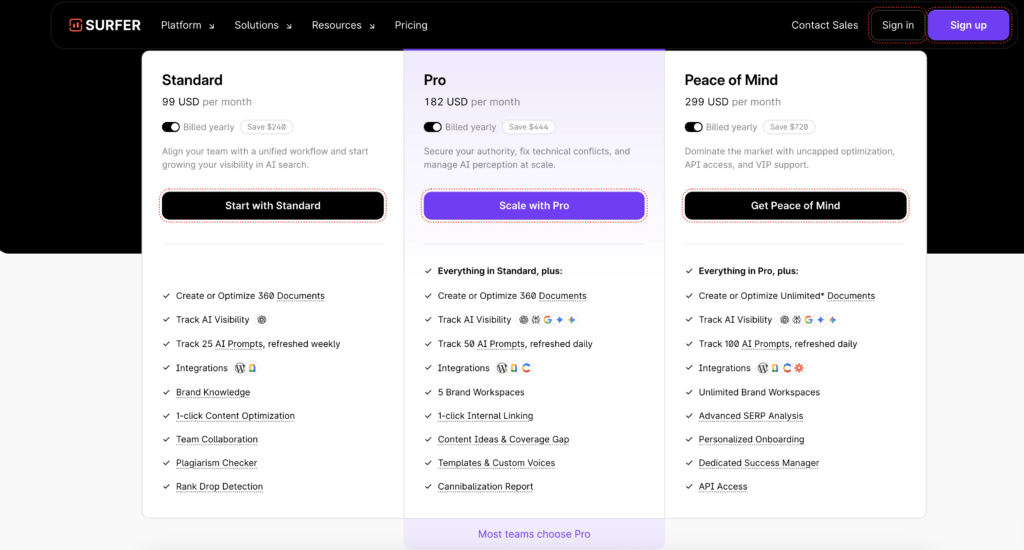
Surfer has completely shifted to AI search optimization. The whole pricing page now focuses on growing your visibility in AI search, not just optimizing SEO content. AI Visibility tracking comes with every plan, with prompt tracking that scales with the tier (25 weekly on Standard, 50 daily on Pro, 100 daily on Peace of Mind).
Some of the great features:
- Content Editor — Get live scoring while you write and compare your draft to the top ranking pages for your target keyword. Still the flagship Surfer feature.
- AI Visibility Tracking — Monitor AI prompts on Perplexity, Google AI Mode, Google AI Overview, and Gemini. Available daily on Pro and above.
- Brand Knowledge — Lets Surfer learn about your brand so AI-generated content actually sounds like you.
- 1-click Content Optimization — Instead of doing it manually, it automatically gives you optimization suggestions.
- 1-click Internal Linking — Automatically suggests and adds internal links to your content.
- Content Ideas & Coverage Gap — Find topics you’re missing that competitors are covering.
- Cannibalization Report — Pages competing against each other for the same keywords.
- Rank Drop Detection — Alerts when your rankings slip so you can react fast.
Surfer’s pricing in 2026:
- Standard — $99/month annual: 360 documents, 25 AI prompts tracked weekly, visibility tracking of Chat GPT, all the core editor features. Built for solo creators and small teams.
- Pro — $182/month annual: 360 docs, 50 daily-updated AI prompts, full AI visibility tracking on 5 platforms, 5 brand workspaces, internal linking, cannibalization reports. Most teams choose Pro, says their pricing page.
- Peace of Mind — $299/month annual: Unlimited documents. 100 AI prompts daily. Unlimited brand workspaces. Advanced SERP analysis. Dedicated success manager. API Access included. The biggest 2026 update is that API access used to be Enterprise-only at $999/month, so this tier got significantly more accessible.
Honestly, Surfer is one of the most practical tools on this list for the SEO crowd that actually writes content (not just tracks competitors). Works great with anything else you pick from this article. And at $99/month annual on Standard with AI visibility tracking baked in, it’s a genuinely competitive option in 2026.
10. Profound
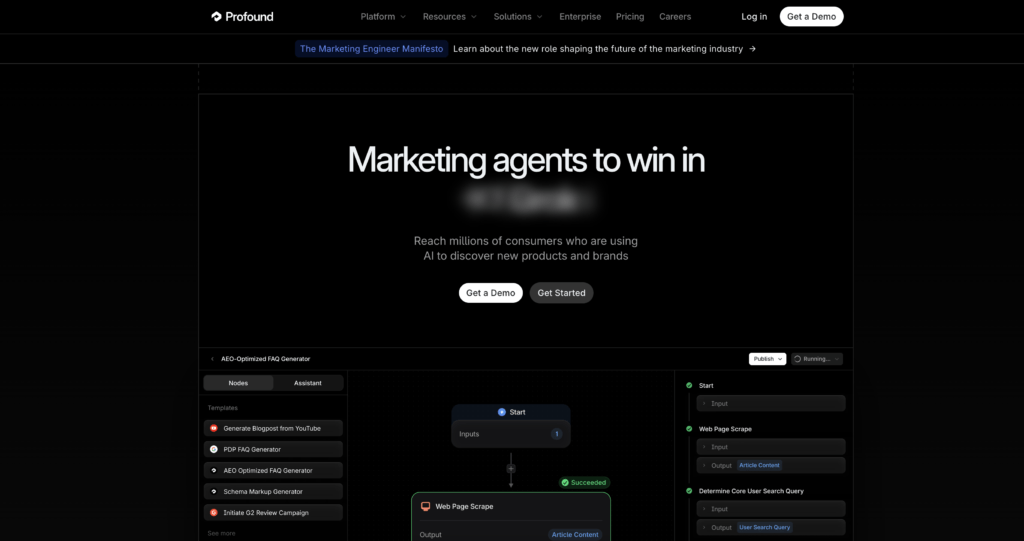
OK, this one is in the last position not because it is less reliable or worse than the rest, but more because it is a bit different from the rest of the list. Profound isn’t really an SEO tool. Nor is it pretending to be one. What it does, and does it very well, is monitor how your brand appears in AI search engines, or “answer engines” as Profound refers to them.
If you’ve been paying attention to the “AI search is eating Google” conversation on Reddit, Profound is one of the names that keeps coming up. backed by Khosla, Kleiner Perkins, NVIDIA and Sequoia (yeah, that level of funding) and their customer list includes Zapier, Clay, US Bank, Mejuri, and others like Ramp, MongoDB and Figma.
But why do I mention it as a Similarweb alternative? Since “competitive intelligence” in 2026 is no longer just traffic data. That’s the sort of insight Profound is built to surface, and Similarweb really has no answer for it if your competitors are being cited in ChatGPT and you’re not.
What Profound actually does:
- Prompt Volumes — Their proprietary dataset that proves the frequency of questions being asked on topics in your category across AI platforms. This is something no other tool does.
- AI Visibility Dashboard — Monitors your brand mentions, citations and share of voice on the major answer engines (ChatGPT, Perplexity, Gemini, Claude, Grok, Meta AI and more).
- Citations — Explore which domains and URLs are actually cited in LLM answers. Helps you determine where to place your content.
- Agents — Their content engine that generates AEO-optimized articles based on the data, and can publish directly to your CMS.
- Crawler Analytics — See how much GPTBot, PerplexityBot, ClaudeBot and others are crawling your domains.
Now for the part that’ll make you wince: pricing.
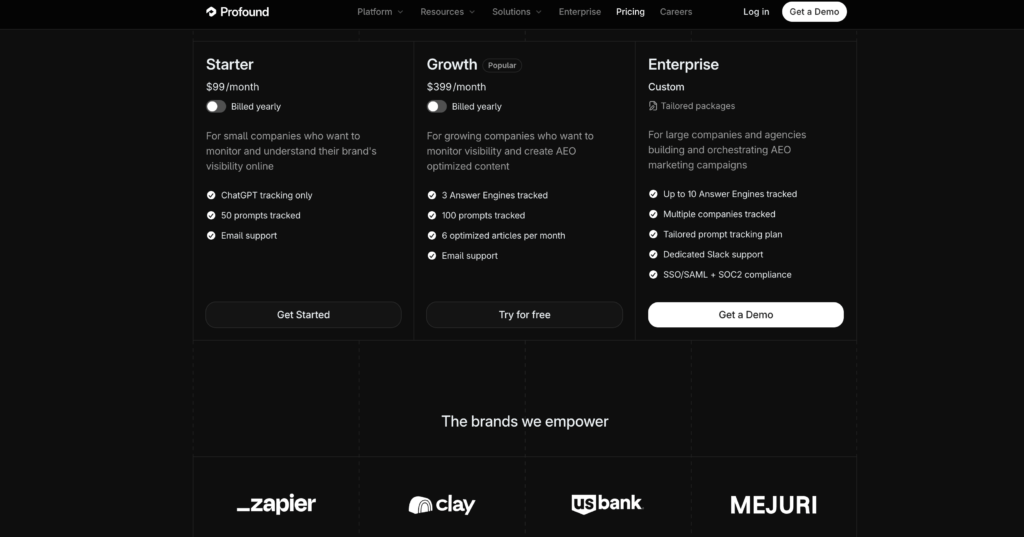
- Starter — $99/month: ChatGPT tracking only, 50 prompts tracked, email support. Most reviewers (and Profound’s own positioning kinda) view it as a “get oriented” tier, not a real working plan.
- Growth — $399/month: 3 answer engines tracked, 100 prompts tracked, 6 optimized articles per month from the Agents engine. This is when serious AEO work really begins. Free trial available.
- Enterprise — Custom pricing: Up to 10 answer engines monitored. Several companies. Tailored prompt plans. Dedicated Slack support. SSO/SAML. SOC2. Custom quotes begin in the low thousands/month.
Worth it if you’re at a brand where AI search visibility is genuinely strategic + you have the budget for an enterprise tool. If you’re a solo affiliate marketer or a small blog it’s probably overkill. But for most readers, this is the tool you start watching now and circle back to when AI search becomes a bigger part of your traffic mix.
Similarweb Alternatives: Conclusion
So there you have it. 10 Similarweb competitors.
Plenty of great tools to choose from. They all have their advantages and disadvantages, but I hope this post helped you a bit and gave you some more options to choose from.
Some have a ton of features at decent prices, while others have fewer tools but at a much lower rate. And in 2026, more of these tools are also starting to track AI search visibility, which matters more every month as ChatGPT, Perplexity, and Google’s AI Overviews keep eating into traditional search traffic. And if you want to get a better understanding of what Similarweb itself actually offers before deciding, I broke down how Similarweb works and what features it has in a separate post.
Let me know which ones are your favorites and why, down in the comments.